

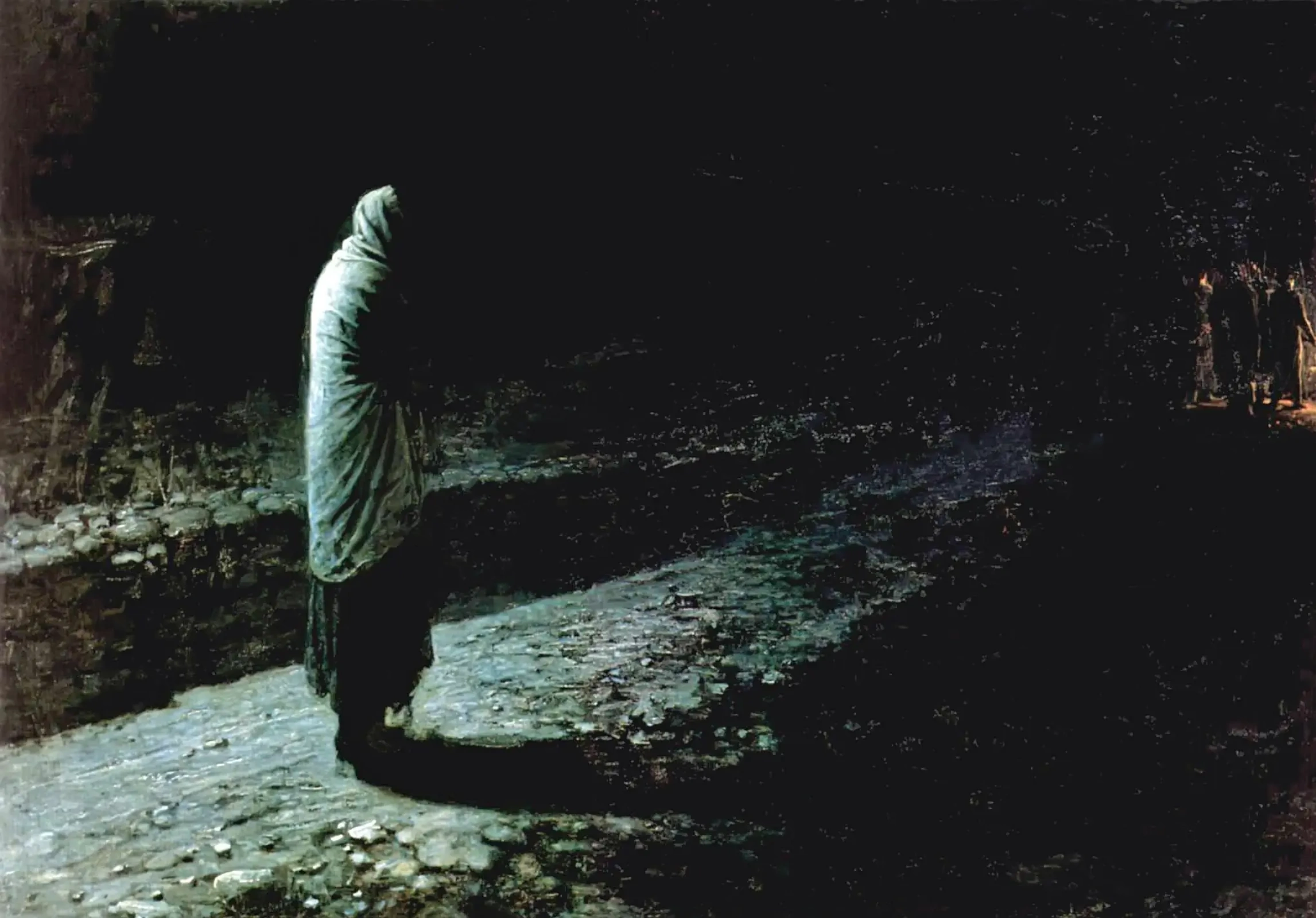
There is no name as heavily laden as that of Judas Iscariot. For two thousand years his name has stood as a synonym for ultimate evil, for the dagger in the back, for the kiss that brings death. Across the centuries we have depicted and seen him as a monster. And that is understandable.
It gives us a sense of safety. For if Judas is a monster, then he is not like us. Then he stands far from us.
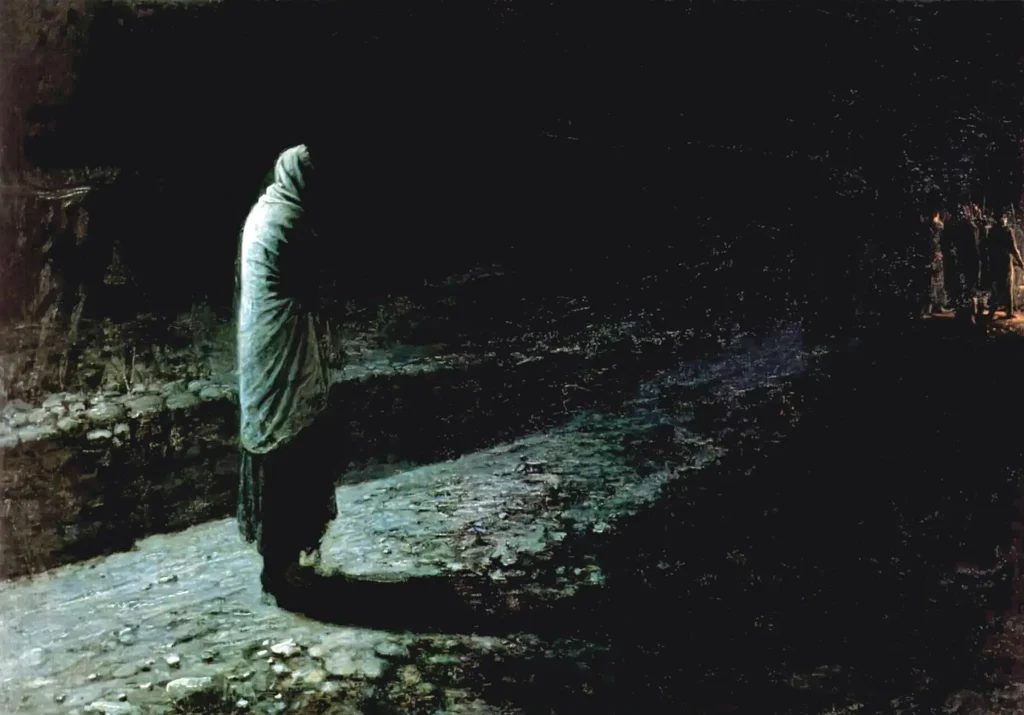
But what if we look at Judas not as a monster, but as a human being? A man who, like the other eleven disciples, left everything to follow Jesus. A man who walked with Him for three years, ate with Him, listened to Him, and saw Him heal. If we make Judas human, his story becomes no less terrible — but it becomes far more piercing. For then Judas becomes a mirror. And what we see in that mirror is sometimes painfully familiar.
The Outsider with a Plan
To understand Judas, we must look at who he was within the group. He was the only one who did not come from Galilee. His name, Iscariot, probably means ‘man from Kerioth,’ a town in Judea. While the other disciples were simple fishermen and craftsmen from the north, Judas was the outsider. He was probably the intellectual of the group, the man of figures, the pragmatist. He was the treasurer.
Judas did not follow Jesus on a whim. He had, like many of his contemporaries, a very specific picture of what the Messiah would do. Judea groaned beneath the yoke of the Roman occupier. The people awaited a strong leader, a king like David, who would drive out the enemy and establish a mighty kingdom. Judas saw in Jesus the man who could do this. He saw the miracles, he heard the authority in Jesus’ voice, and he thought: This is the one.
But Judas had written a script for Jesus. He had a plan in his head about what the deliverance was supposed to look like. And there the tragedy begins, for Jesus was different from what he had thought.
When the Other Does Not Conform to Your Image
We all recognize this in our own friendships and relationships. We meet someone, and we form a picture of that person. We have expectations. We think we know who the other is and what the other is supposed to mean for us. But at some point the other does something that does not fit our picture. The other disappoints us, makes choices we do not understand, or refuses to meet the demands we — often unspoken — place on them.
In Judas, disappointment slowly grew into frustration. He heard Jesus speak about the Kingdom of God, but Jesus seemed to make no move to raise an army. On the contrary, Jesus began to speak more and more about suffering, about serving, about loving your enemies, and about His own death.
For Judas this was incomprehensible. It was weakness. In his eyes Jesus was losing His grip on the situation. Judas’ admiration changed slowly into something cold and distant. The friendship was no longer an open encounter; it had become an evaluation. Judas was no longer following — he was assessing.
The Turn: From Person to Object
The moment when the friendship snapped definitively was probably the incident with the costly perfume. A woman pours a fortune of nard oil over the feet of Jesus. It is an act of love. A moment of self-giving.
But Judas looks on and sees only the waste. He begins to calculate. “This could have been sold for three hundred denarii,” he says.
But Jesus said: ‘Let her alone. She has done it in view of my burial. For the poor you always have with you, but you do not always have me.’
Does Judas not see in this a friend who is leaving him in particular? A friend who has “gone mad”?
Judas no longer sees in Jesus the deliverer he had hoped for; is he not enormously disappointed? What, then, is He still worth? For Judas the answer is painfully concrete: thirty pieces of silver. The price of a slave. Judas does not sell Jesus only for the money; he sells Him because in his eyes Jesus had already become an ‘object.’ Something one can dispose of. Something one can exchange.
The Language of Betrayal
It is fascinating to watch how Judas’ language changes. In the last days before the betrayal, the other disciples still call Jesus “Lord.” That is a word of recognition, of friendship, and of self-giving. But Judas calls Him “Rabbi,” master or teacher.
It sounds respectful, but it is a demotion. A “Lord” you follow with all your heart, but a “teacher” is someone you listen to as long as it suits you. Judas had already removed Jesus from his heart. The inward bond was gone; only the outward form remained.
This brings us to the kiss in the garden of Gethsemane. Why a kiss? Judas could simply have pointed Jesus out with his finger. But the kiss is the ultimate expression of objectification. Judas uses a symbol of love to complete a business transaction. It is so intense a moment because the form of friendship is used to destroy the friendship. It is the human being using the other wholly as an instrument for his own plan.
The Desperate Forcing-Move
There are historians and theologians who think that Judas did not want Jesus dead. They suggest that the betrayal was a ‘forcing-move.’ Judas may have thought: If I deliver Jesus over to the soldiers, then He will have to use His divine power. Then I will compel Him to enter the fight and unleash the revolution.
If this is true, the tragedy only deepens. It is the human being trying to compel God to fit into his human little plans. It is the ultimate pride: thinking that you know better than the other, and manipulating the other in order to prove your point.
When Judas saw that Jesus let Himself be bound, that no legions of angels came, and that the Master walked the way of the cross, his world collapsed. Not because he had wished to be a murderer, but because he realized that he had thought his own plan more important than the person of Jesus. He had sacrificed friendship to his own ideology. And now everything was gone. The thirty pieces of silver burned in his hands. They had become the symbol of his total loneliness.
Why Judas Is the Mirror
Why is this a mirror for us? Because we all have a little Judas in us.
How often do we not use the people around us for our own ends? How often do we have a script for our spouse, our children, or our friends? And how do we react when they do not conform to that script? Do we grow cold? Do we begin to objectify them? Do we set them aside?
Betrayal almost never begins with a great, malicious plan. It begins small. It begins when we stop listening to the other and listen only to our own expectations. It begins when we start to ‘weigh’ and ‘measure’ the other on the basis of what they yield to us.
We betray the other when we reduce him or her to a function. “My husband is there for my stability.” “My friend is there for the good times.” “My colleague is there to make my work easier.” The moment the other is no longer stable, no longer enjoyable, or no longer makes the work easier, we grow frustrated. And in that frustration we begin to treat the other as an object. We withdraw, we grow cynical, we speak about them instead of with them. That is the way of Judas.
The Reaction of Jesus: The Word “Friend”
The most shocking thing in the whole story of Judas is perhaps not the kiss, but the reaction of Jesus. The moment Judas leads the soldiers to Him, Jesus looks at him and says: “Friend, why are you here?”
Imagine that. Jesus knows everything. He knows of the theft from the purse, He knows of the thirty pieces of silver, He knows of the kiss that is coming. And still He calls him “Friend.”
This is the heart of the whole matter. Judas objectifies Jesus, but Jesus refuses to objectify Judas. For Judas, Jesus has become an instrument that he could exchange. But for Jesus, Judas remains a man, a subject, a friend. A man whose feet He had washed only the day before. Even at the heart of the betrayal, Jesus continues to seek the connection. He does not speak to a ‘traitor,’ He speaks to a person, a man, a soul.
This is the great contrast. The evil of Judas was the objectifying. The love of Jesus is the refusal to give the other up, however deeply that other has fallen.
The Despair and the Way Out
Judas ended his life in despair. He flung the money into the temple and hanged himself. It is a heart-breaking end. Why could he not return? Peter, after all, had also betrayed Jesus. Peter denied three times that he knew Jesus. That was, in essence, the same thing: Peter broke the bond, he chose his own safety over the friendship.
The difference between Judas and Peter did not lie in the gravity of their fault, but in their gaze upon Jesus. Judas was so caught up in his own logic and his own guilt that he could no longer believe in a love greater than his betrayal. He kept on objectifying Jesus, even after his sin: he saw Jesus now as the ‘victim’ of his guilt, a dove in the temple, no longer as the ‘Friend’ who could forgive.
Peter, by contrast, let his own ego go. He wept bitter tears, but he remained open to the encounter. He let Jesus call him by his name again.
What We Can Learn
The story of Judas invites us to look at ourselves with great honesty. Where are we treasurers of our own being-right? Where are we busy pushing the people around us into boxes and judging them on their usefulness?
The mirror of Judas shows us that the greatest sin is not that we make mistakes, but that we no longer see the other as a person. That we lock the other inside our own judgment.
But the mirror shows something else as well. In Judas’ reflection we always see Jesus standing in the background. The Man who refuses to play along in the game of objectification. The Man who, even when we give the kiss of betrayal, still looks at us and asks: “Friend, why are you here?”
That is the invitation. To step out of the cold logic of objectification. To see the other again, truly. To tear up the script we have written for others, and to give them the space to be who they are.
Judas reminds us how easy it is to lose love when we want to see results. But he also reminds us that we are never an object in the eyes of God. We are always a person, always a friend, however far we have strayed from the path. The story of Judas is a warning, but the reaction of Jesus is a promise: the way back to humanity begins the moment we dare to look the other in the eyes again, without wanting to use them.
Leave a Reply